



























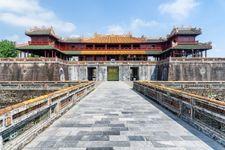

 Iconic place
An Dinh Palace: Franco-Vietnamese Elegance in Hue
An Dinh Palace holds a unique place in Vietnam’s imperial heritage. Less well known than the Imperial City or the great royal mausoleums, it nevertheless embodies a turning point in the history of the Nguyen dynasty: a moment when Vietnam opened itself to Western influences while remaining deeply rooted in its own traditions.
Located in the heart of Hue, this former imperial residence bears witness to a rare architectural dialogue between East and West. Here, European classicism meets Vietnamese imperial aesthetics in a setting of remarkable originality.
History of An Dinh Palace
Originally, the site served as the private residence of Prince Vinh Thuy, the future Emperor Bao Dai. It was under the initiative of Emperor Khai Dinh that the estate was profoundly transformed.
In 1917, Khai Dinh decided to modernise the site. The old structures were removed to make way for new buildings, across a total area of 23,463 m². The complex was renamed An Dinh Cung.
Later, the palace was passed on to Bao Dai, the last emperor of the Nguyen dynasty. Through this transfer, An Dinh Palace became a discreet symbol of the end of an era and the country’s transition towards modernity.
A distinctive Franco-Vietnamese architecture
An Dinh Palace is often considered one of the most representative examples of Franco-Vietnamese architecture in Hue.
In the early 20th century, the colonial period in Vietnam introduced new materials and new architectural forms. Reinforced concrete, decorations inspired by European neoclassicism and Western ornamental elements began to appear in imperial architecture.
Yet these Western influences did not replace tradition. They were layered upon it. The palace as a whole reflects a subtle harmony between Vietnam’s imperial heritage and modernity.
The main gate
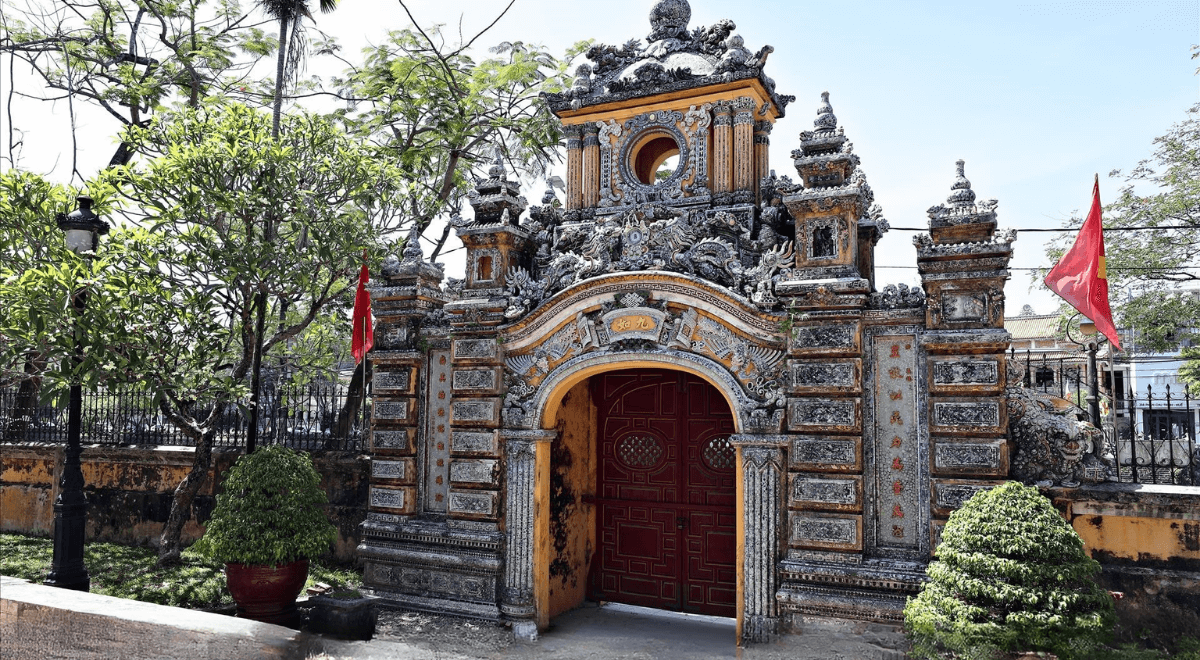
From the entrance, visitors discover a monumental two-level gate, built of brick and finely decorated with sculpted dragons.
At the top, the inscription “安定宮” recalls the palace’s original name in Sino-Vietnamese characters. The inlaid ceramic decorations and colourful reliefs highlight the artistic refinement of the ensemble.
The sculpted pearl at the top of the gate symbolises prosperity and imperial power.
Trung Lap Pavilion
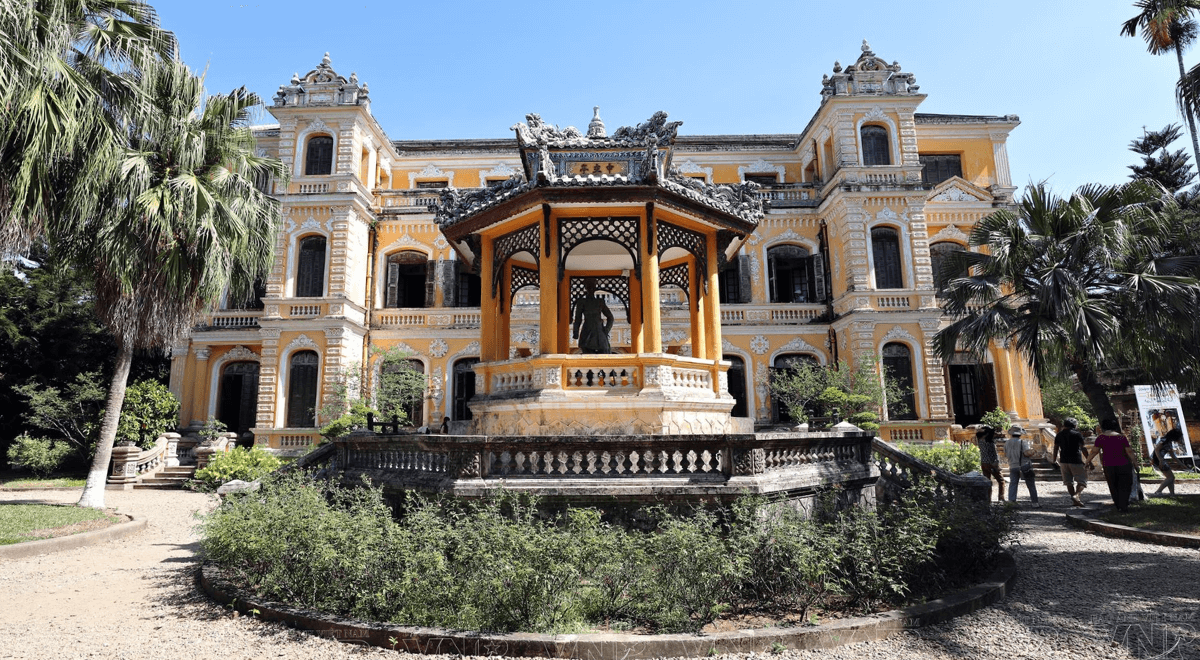
In the centre of the courtyard stands Trung Lap Pavilion, an octagonal structure.
Its roof is decorated with twelve dragons in relief, recalling the traditional iconography of the Nguyen dynasty. Inside stands a bronze statue of Emperor Khai Dinh, created at life size in 1920.
This pavilion marks the transition between the outer space and the heart of the complex. It represents the link between imperial tradition and architectural modernity.
Khai Tuong Palace
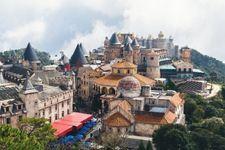
The main building of An Dinh Palace is Khai Tuong Pavilion. Built on three levels, it draws inspiration from European castles while preserving Asian symbolism. Its façades combine yellow and white tones, characteristic of imperial architecture.
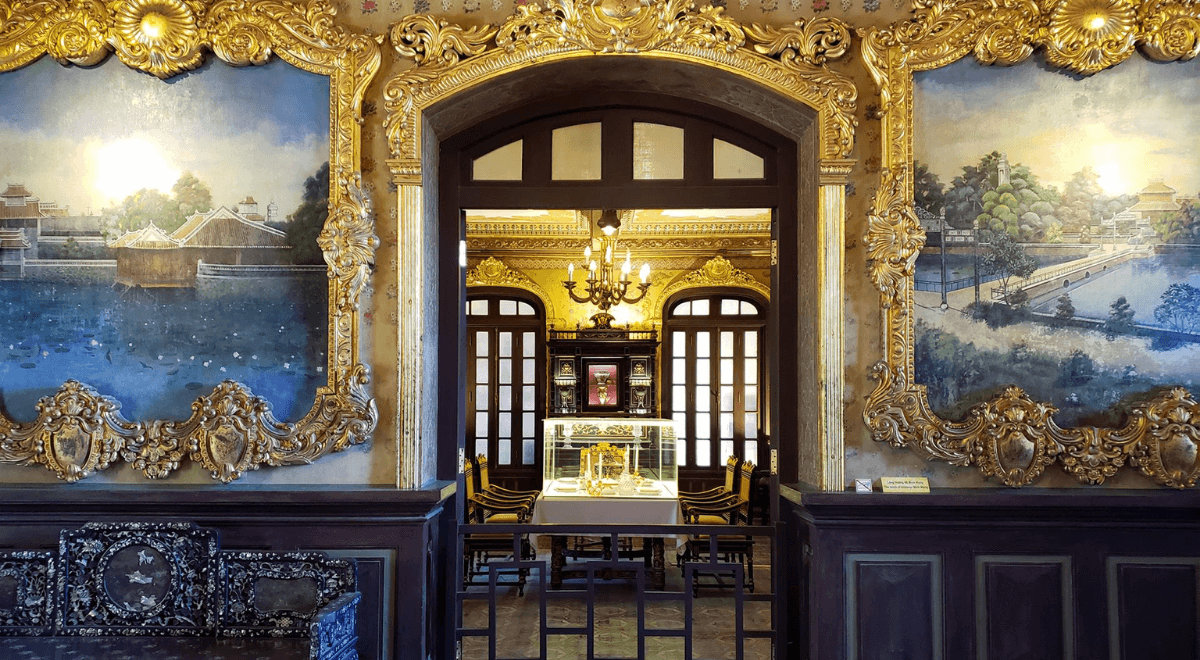
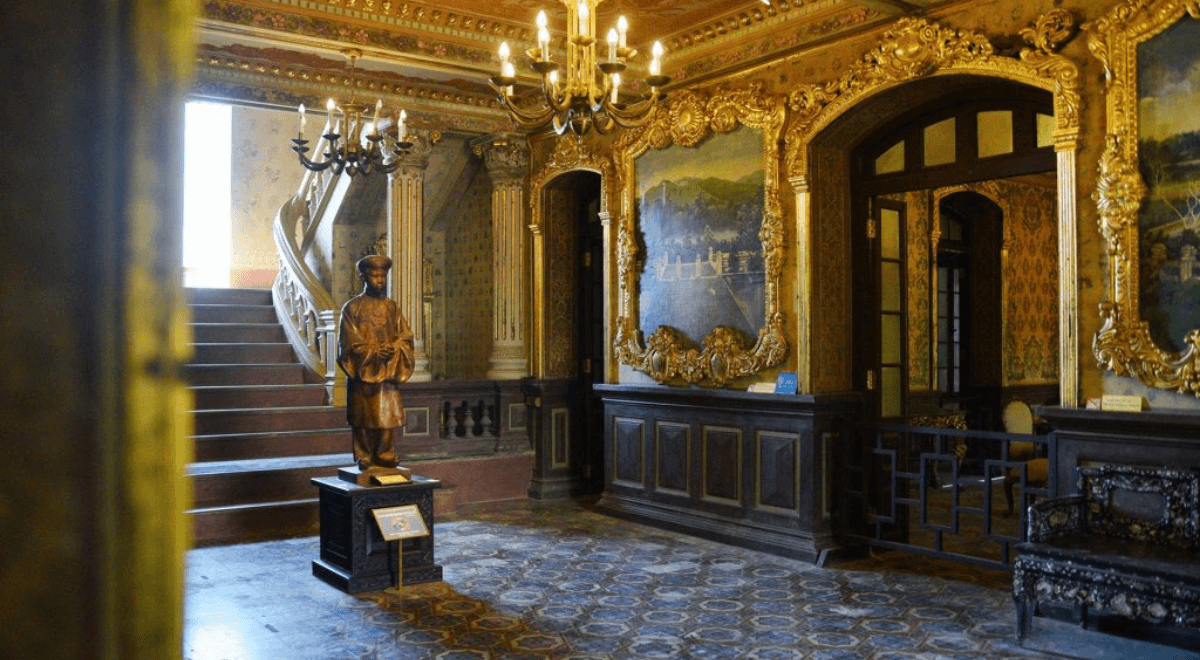
The interior is the highlight of the visit. The first floor houses large gilded wall paintings of great artistic value. Among them, six paintings depict the mausoleums of Emperors Gia Long, Minh Mang, Thieu Tri, Tu Duc, Dong Khanh and Khai Dinh. Researchers consider An Dinh Palace a remarkable example of the neoclassical style in Vietnam.
The interior details reveal the extent of Western influences in Hue. Crystal chandeliers, monumental double-flight staircases and door handles imported from France can all be seen here. The Cuu Tu Dai Theatre, once reserved for the entertainment of the imperial family, reflected a refined art of living. This alliance between European decoration and Eastern symbolism fully illustrates the architectural blend typical of Vietnam in the early 20th century.
Practical information
Address
179 Phan Dinh Phung, Phu Nhuan, Hue, Thua Thien Hue Province.
Opening hours
Open daily from 7:00 AM to 5:00 PM.
Entrance ticket
Entrance fee: approximately 50,000 VND per person.
A discreet witness to the end of the imperial era
An Dinh Palace does not have the monumentality of the imperial tombs or the solemnity of the Imperial City. Yet it tells an essential story: that of a Vietnam between tradition and modernity. Through its Franco-Vietnamese architecture, it reflects the tensions and transformations of the final years of the Nguyen dynasty. Today, it remains a precious element of Hue’s imperial heritage, offering a deeper understanding of the country’s historical transition.
Visiting An Dinh Palace means stepping into a more intimate chapter of imperial history, where European elegance enters into dialogue with the Vietnamese soul.
Discover Vietnam’s cultural journeys with Villages Vietnam
 We invite you to experience rare and meaningful moments:
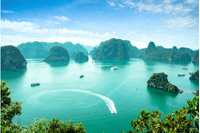
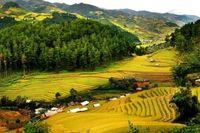
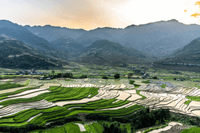
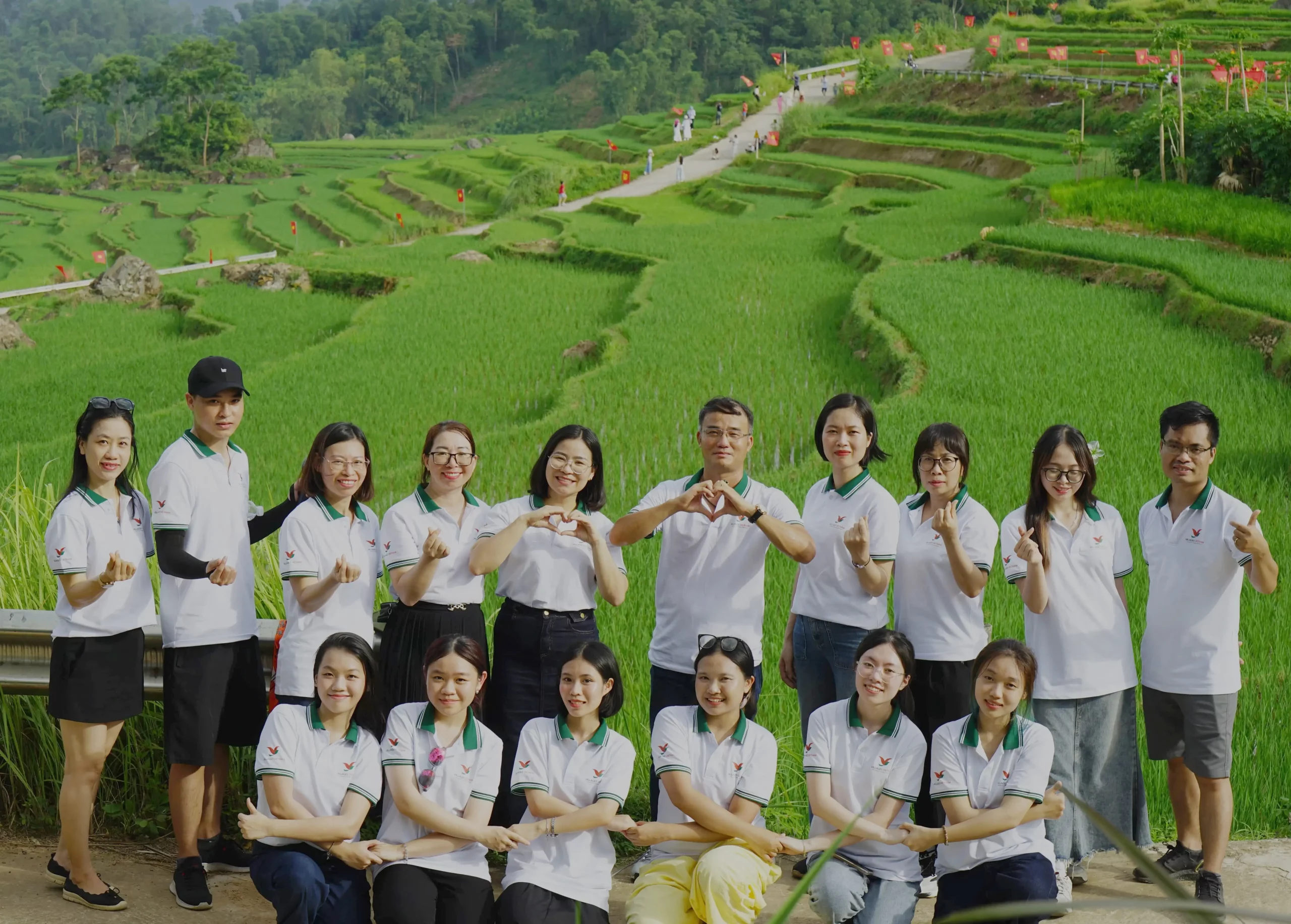
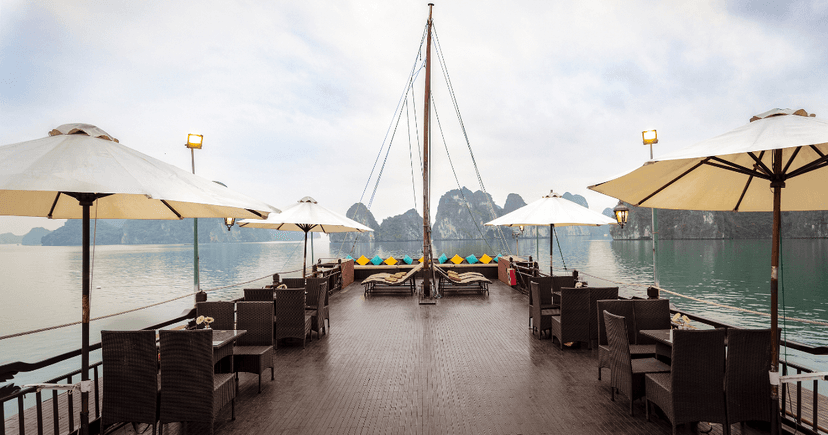
- Lose yourself in the picturesque landscapes of Vietnam
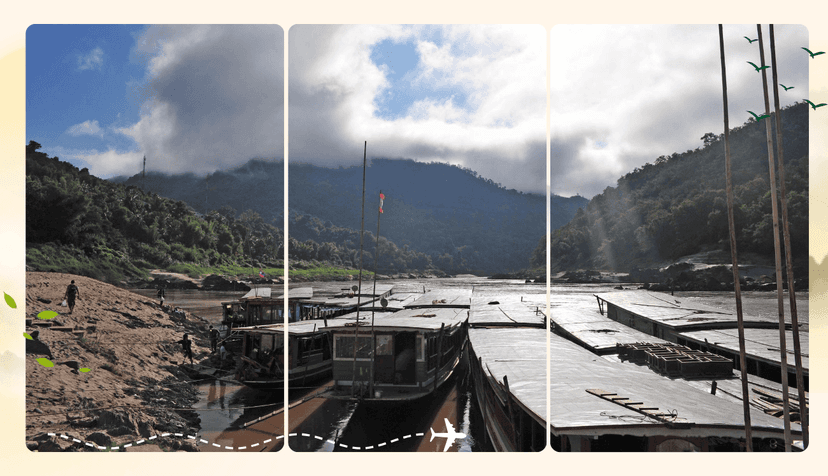
- Follow the peaceful rhythm of the rice fields in Laos
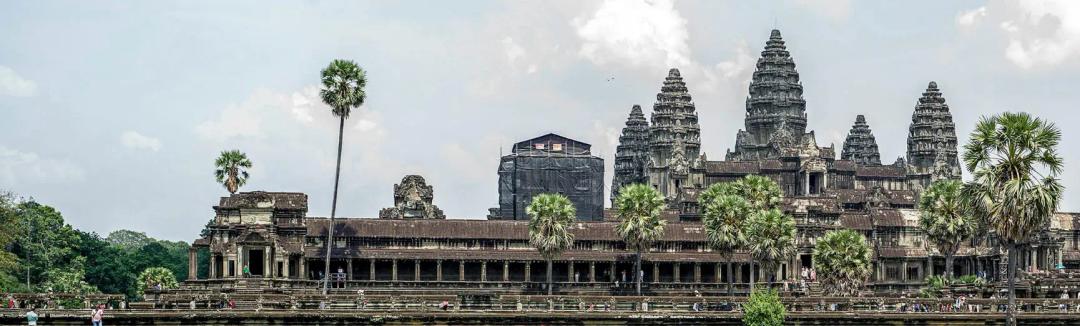
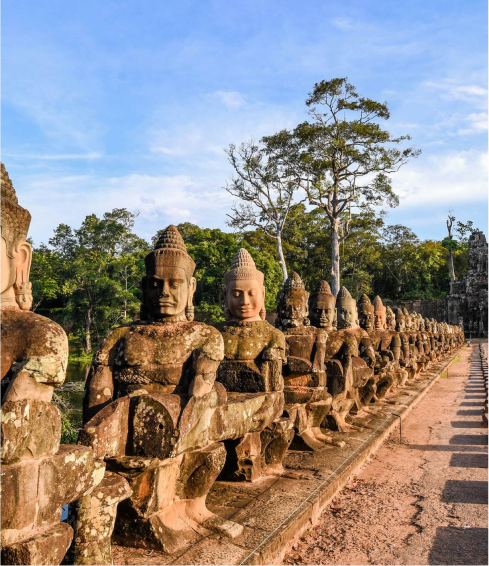
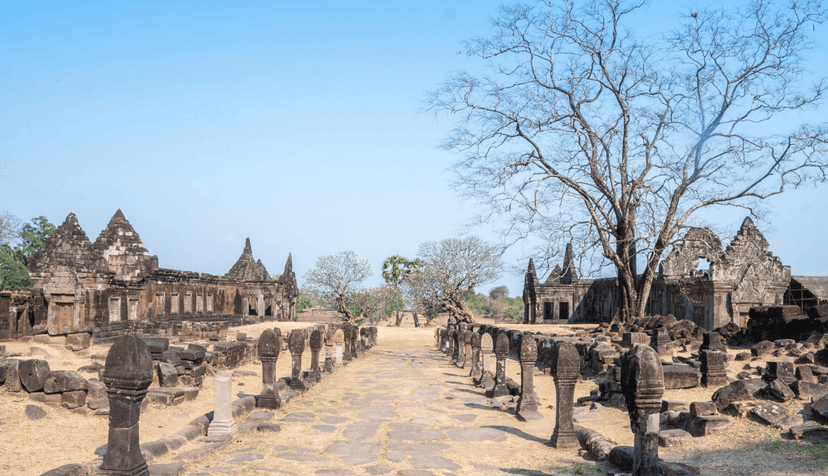
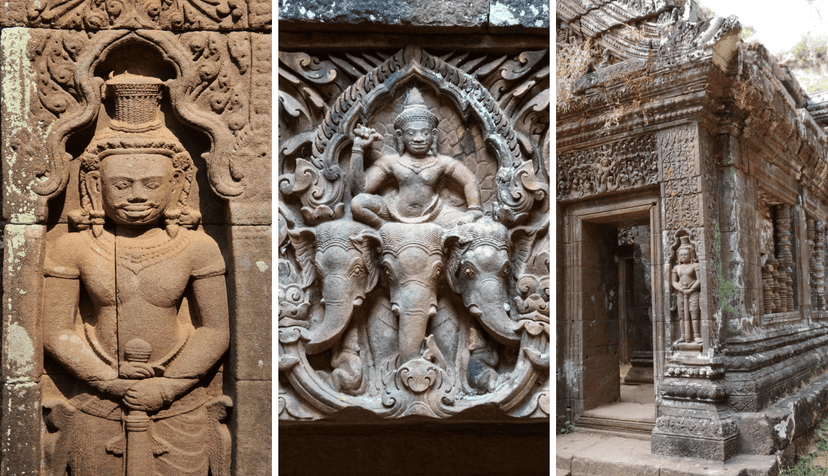
- Walk quietly towards the ancient temples of Cambodia, hidden in the heart of a lush forest
Villages Vietnam is proud to create authentic cultural journeys, designed with care and heart. Our tours reveal the soul of Indochina, its traditions, its gentle rhythm and the warmth of its people.
If you dream of a unique journey, created especially for you, a journey that leaves a lasting mark on the heart, our team will be there, attentive and available.
We promise you the most beautiful discoveries: stories to share, emotions to feel and all our knowledge of the lands you will explore.
We are committed to offering you the most beautiful discoveries, sharing with you our secrets, our passion and our deep knowledge of every destination you explore.
- Contact: Ms Jade VU
- WhatsApp: +84 0986 527 836
- Email: info@villagesvietnam.com
- Vietnam Office: 7th Floor, 30 Tran Phu Boulevard, Ha Dong District, Hanoi, Vietnam
- France Office: 726 Chemin de la Croix du Sud, 83200 Toulon, France
- Thailand Office: Klang Muang Village, Soi Srinakarindra 24, Srinakarindra Road, Suan Luang District, Bangkok 10250 Thailand
Published by:
Villages Vietnam
Publication date:
09/07/2026
Beautiful journeys
Travel guide

Frequently Asked Questions
In general, the best time to visit Vietnam is from November to April. But you can travel all year round. The weather changes a lot from region to region, so when it rains or gets cold in one place, it can be sunny somewhere else.
Internet access is easy and affordable. Most hotels, cafés, and restaurants offer free Wi-Fi. If you want to stay connected all the time on your phone, you can buy a local SIM card. It gives you a stable connection during your trip for a very good price.