





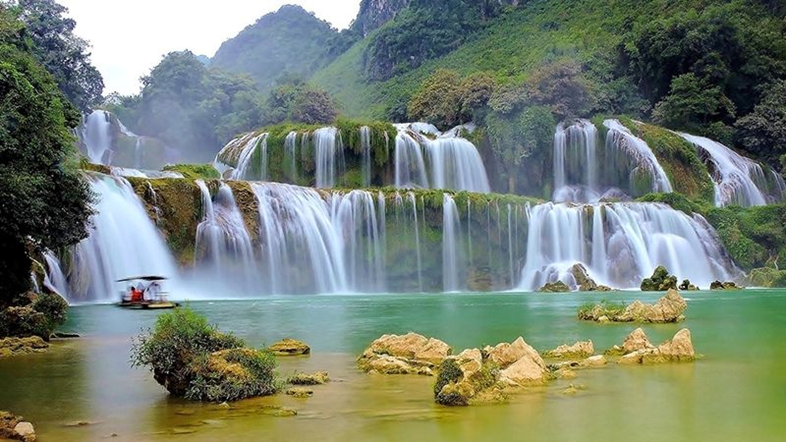
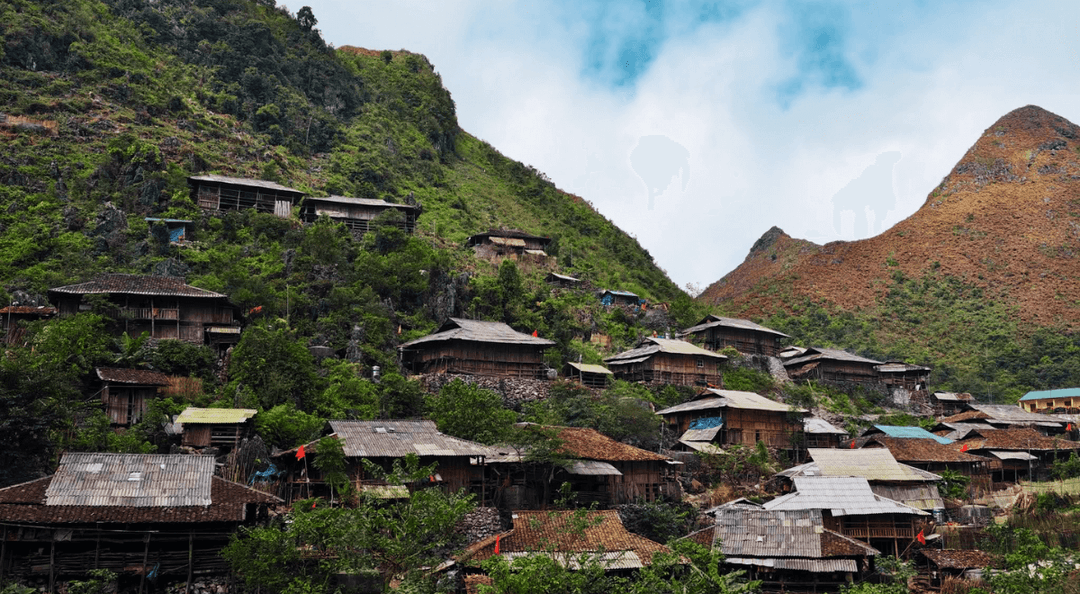
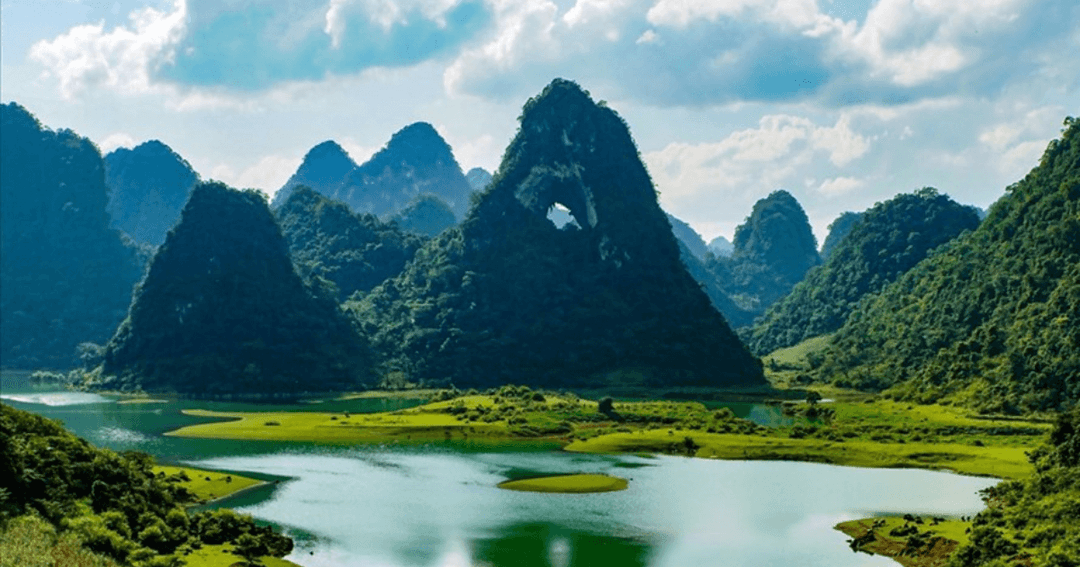

















 Iconic place
Vietnamese Cultural Moments – Vietnam Heritage Photo Contest 2025
Vietnamese cultural moments are not limited to landscapes or monuments. They live in a smile, in the sound of a festival drum, in a gesture passed down from parent to child.
The Vietnam Heritage Photo Contest 2025 offers us a window into these simple yet profound moments. Each photograph tells a fragment of life: an ancient ritual, a working season in the rice fields, a lively village celebration.
Through these images, a peaceful Vietnam emerges. A warm, vibrant Vietnam, deeply rooted in its traditions. A country that invites travelers to look, to feel, and to be moved.
🏆 Awards Ceremony – Vietnam Heritage Photo Contest 2025
The awards ceremony of the Cuộc thi Ảnh Di sản Việt Nam 2025 was held on November 23 at the Tôn Đức Thắng Museum in Ho Chi Minh City, on the occasion of the 20th anniversary of Vietnam Cultural Heritage Day.
This year, the contest gathered 1,034 works submitted by 203 photographers from across the country, showcasing the richness of both tangible and intangible heritage through customs, traditional festivals, community life, and natural landscapes across the three regions of Vietnam.
More than 30 works were awarded, divided into two categories: “Gen Z” and “Photographers with no age limit”.
📸 Highlights of Vietnamese cultural moments
The Vietnamese cultural moments presented below are among the most highly regarded scenes by specialists. These moments were praised for their beauty, authenticity, and human value, earning top distinctions in this year’s photographic competition.
🎭 Then Rite of the Nùng Phàn Slình in Lạng Sơn
Among the most profound traditions of northern Vietnam, the “cap sắc Then” ceremony of the Nùng Phàn Slình people in Lạng Sơn remains a unique and sacred moment. Over three days and three nights, a series of rites—purification, walking on burning embers, ritual dances—mark the elevation of a chosen man as a new Then master, authorized to lead prayers, spiritual healing, community ceremonies, and traditional festivals.
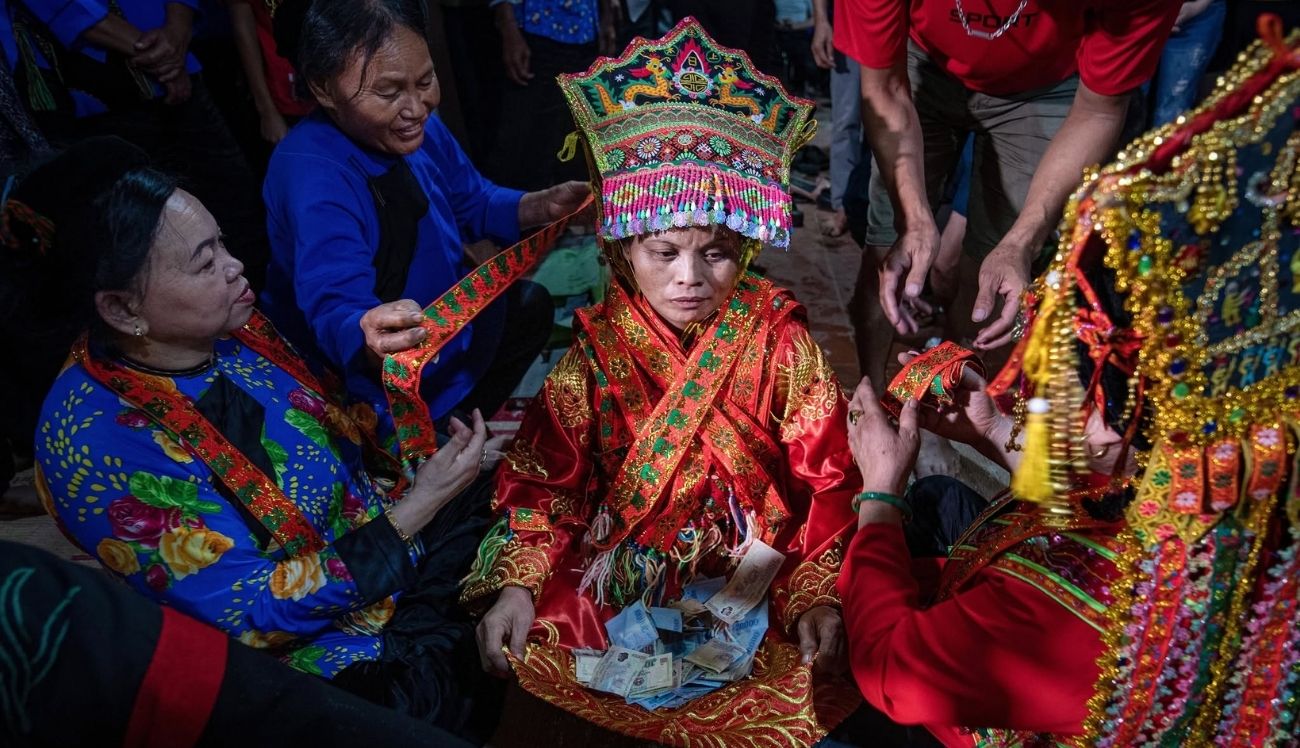
The Gold Prize in the “Photographers with no age limit” category was awarded to the work “Then Rite of the Nùng Phàn Slình in Lạng Sơn”
Since 2019, the Then practice of the Tày, Nùng, and Thái peoples has been inscribed by UNESCO on the Representative List of the Intangible Cultural Heritage of Humanity—a tribute to the living memory of Vietnam’s mountain communities.
🌾 Mùa cấy – Rice transplanting season in terraced fields
One of the award-winning photographs, titled “Mùa cấy” by Hoàng Bích Nhung, captures a precious moment: women transplanting rice seedlings in water-filled terraced fields in the Lào Cai region, in June 2024.
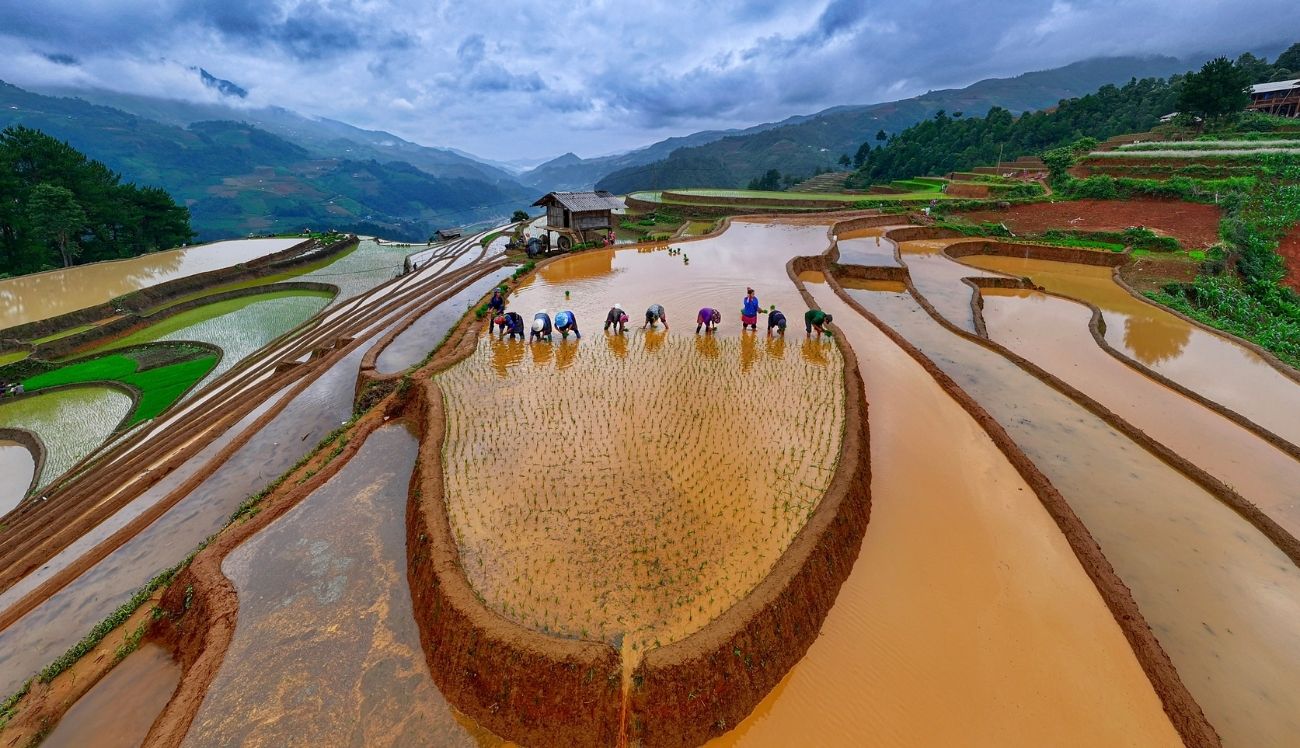
Mùa cấy – Rice transplanting season in terraced fields
This silver medal–winning image pays tribute to agricultural rhythms, the land, and collective labor—a powerful visual testimony of rural life in northern Vietnam.
🏹 Legendary Hội Gióng Phù Đổng Festival
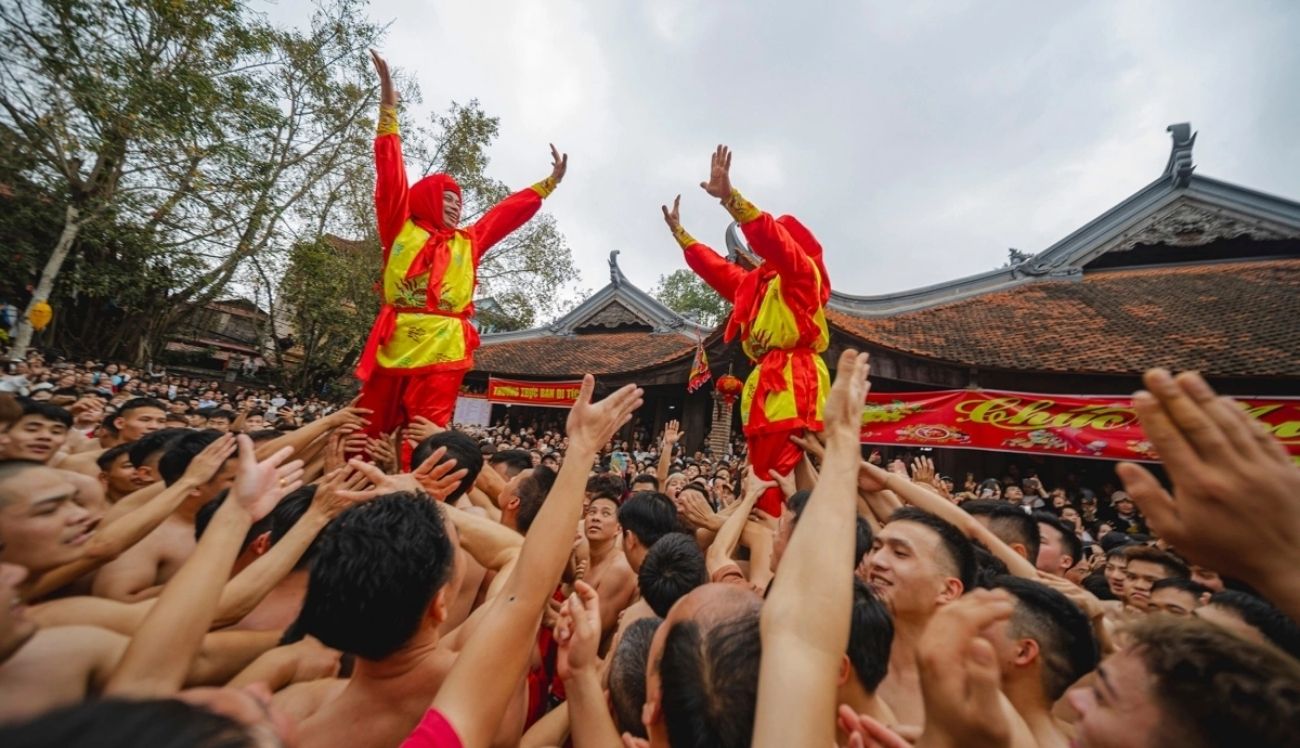
The work “Hội Gióng Phù Đổng” by Phạm Quốc Dũng received a consolation prize. Celebrated annually in early April according to the lunar calendar, this festival commemorates the legend of the national hero Thánh Gióng, a symbol of bravery and popular unity.
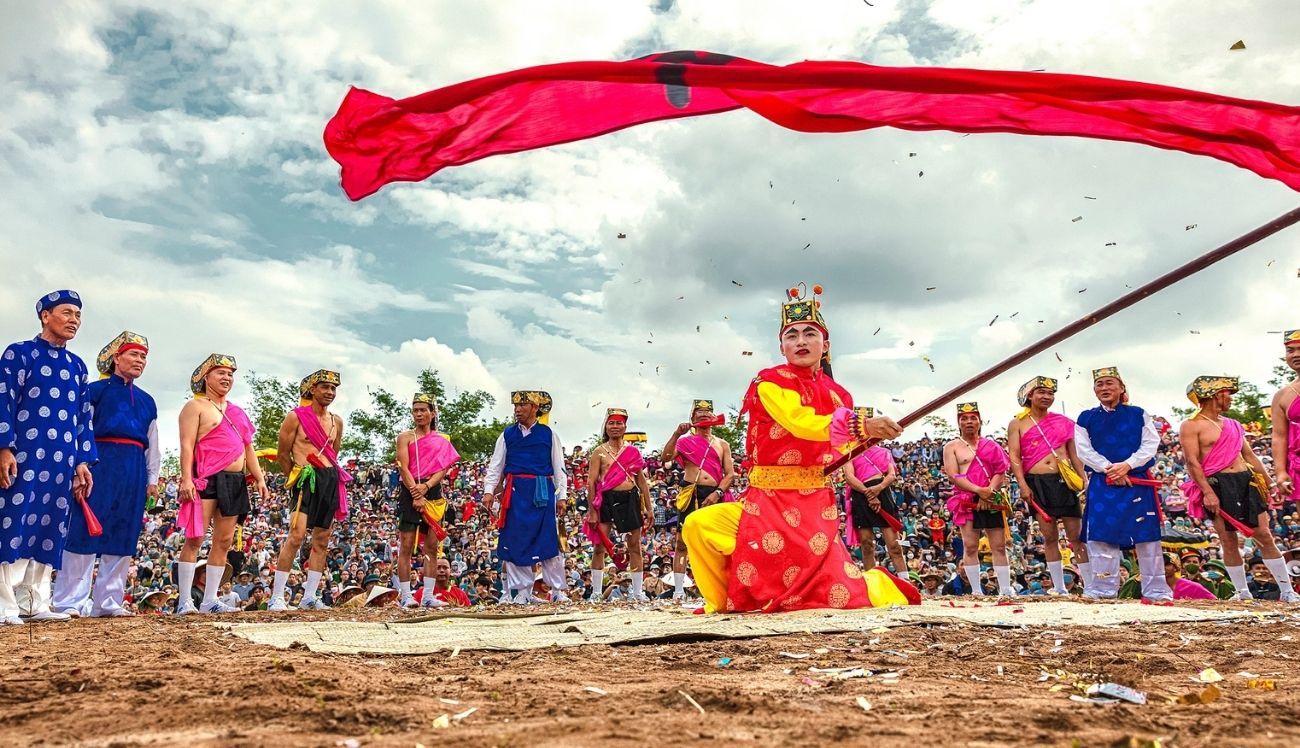
Legendary Hội Gióng Phù Đổng Festival
The festival was recognized by UNESCO in 2010 as an Intangible Cultural Heritage of Humanity.
🎍 Making bánh dày in Lào Cai
Captured by photographer Đặng Phương Lan, this scene shows young Hmong women taking part in a traditional bánh dày making contest during Tết.
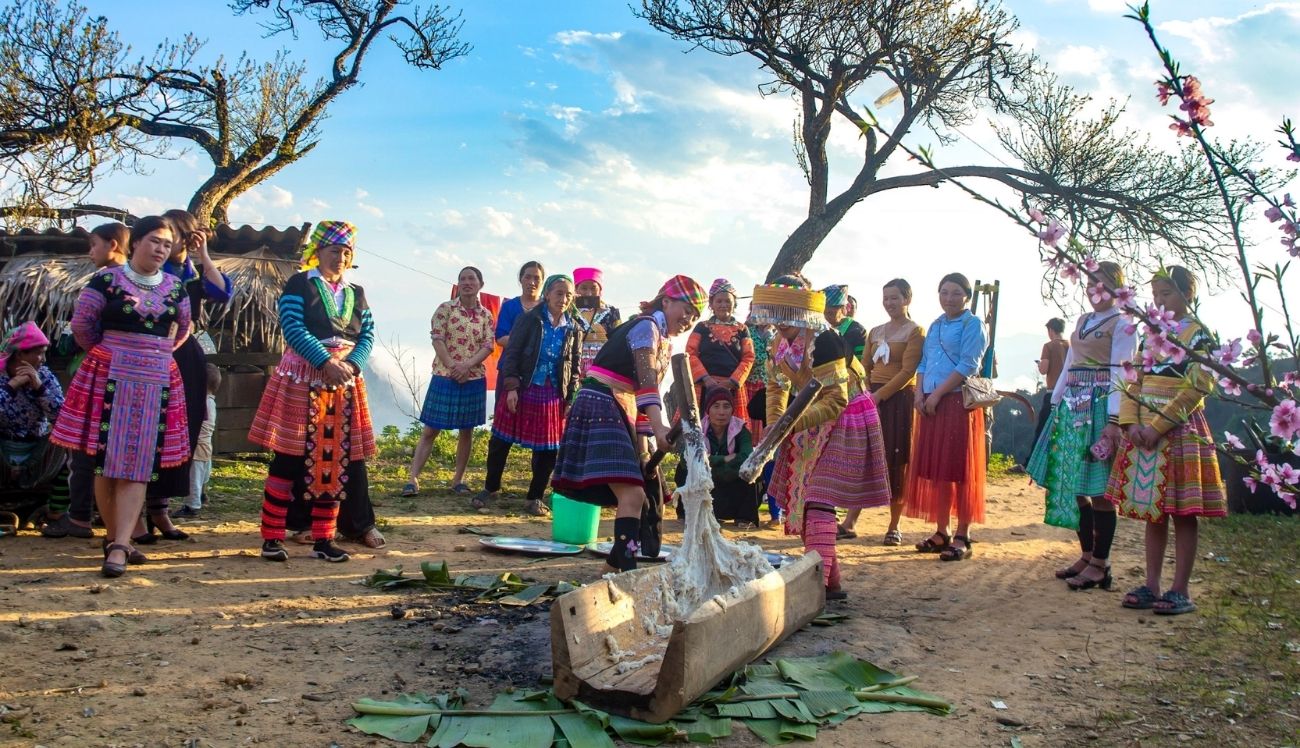
Making bánh dày in Lào Cai
An authentic moment revealing the persistence of rural traditions, conviviality, and cultural transmission.
🌿 Dựng nêu ceremony in Huế
Photographer Nguyễn Xuân Thao captured the dựng nêu ceremony in Huế, held on the 23rd day of the 12th lunar month—a royal ritual announcing Tết. A 15-meter bamboo pole, decorated with dong leaves, banners, and ritual symbols, is raised to the sound of traditional music.
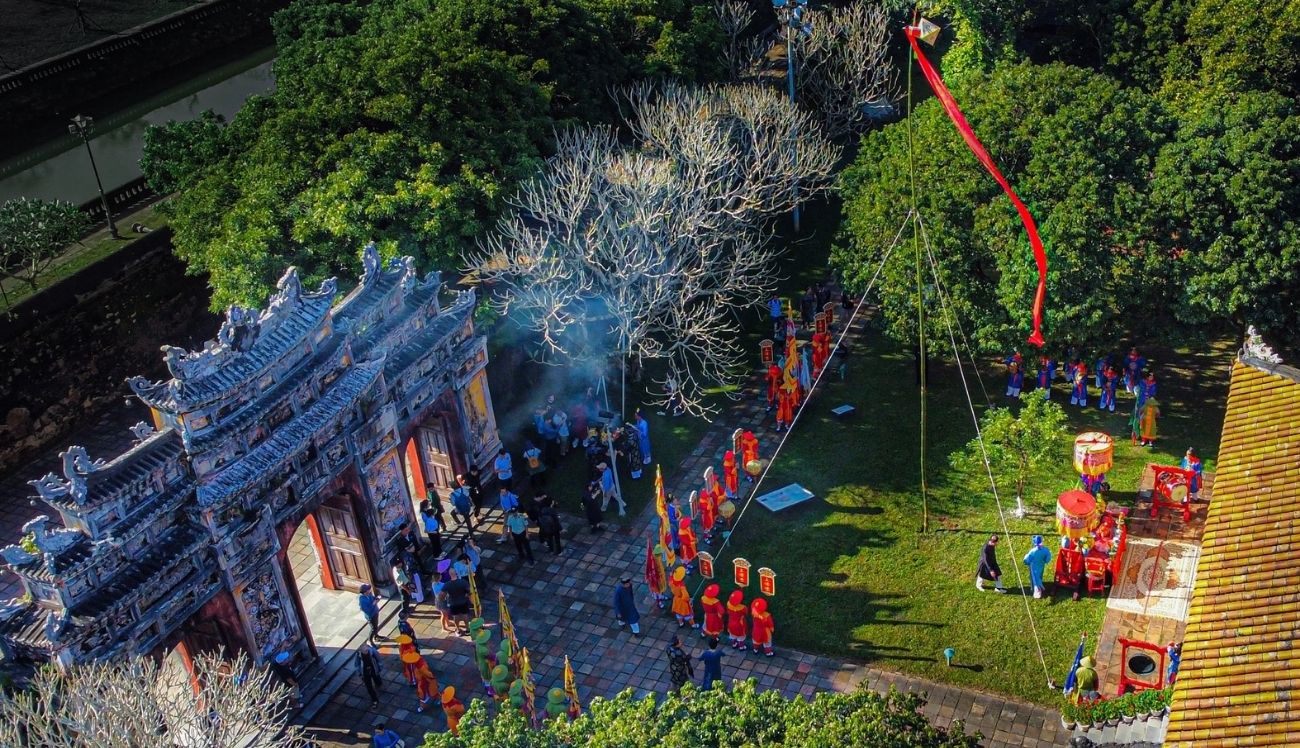
Dựng nêu ceremony in Huế
Preserved within the imperial citadel, this ancestral ritual evokes harmony between spirituality, memory, and respect for ancestors.
💃 “Con đĩ đánh bồng” dance in Triều Khúc (Hanoi)
Among the Gen Z category, “Tiếp nối” by Nguyễn Quốc An won the Grand Prize. The photograph depicts a performance of the traditional “con đĩ đánh bồng” dance—one of the ten ancient dances of Thăng Long—reenacted during the Triều Khúc village festival at the beginning of the lunar year.
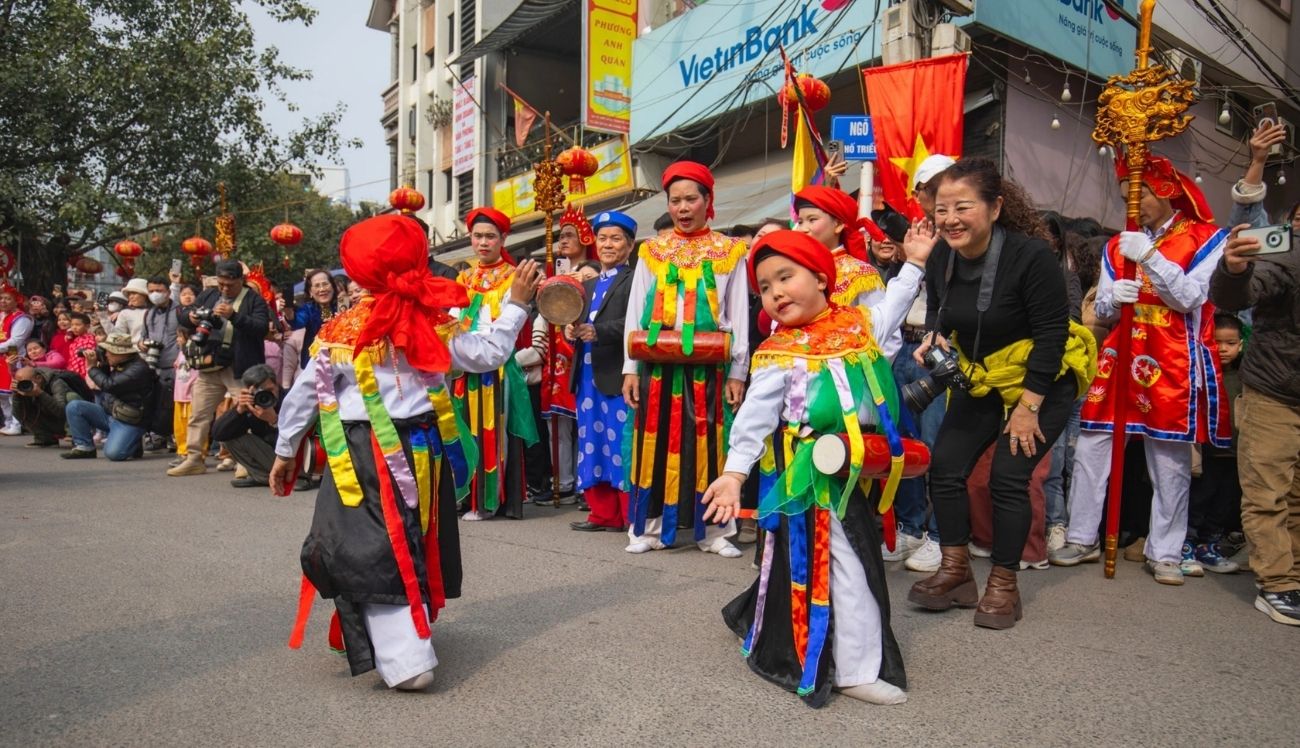
Con đĩ đánh bồng dance in Triều Khúc (Hanoi)
This warrior and festive dance dates back to the 8th century, when the legendary hero Phùng Hưng is said to have rallied his warriors to repel invaders.
Today, the festival has been listed as a National Intangible Cultural Heritage since 2019, revitalizing community spirit, collective memory, and local identity.
🔥 Traditional fire procession in Đồng Kỵ (Bắc Ninh)
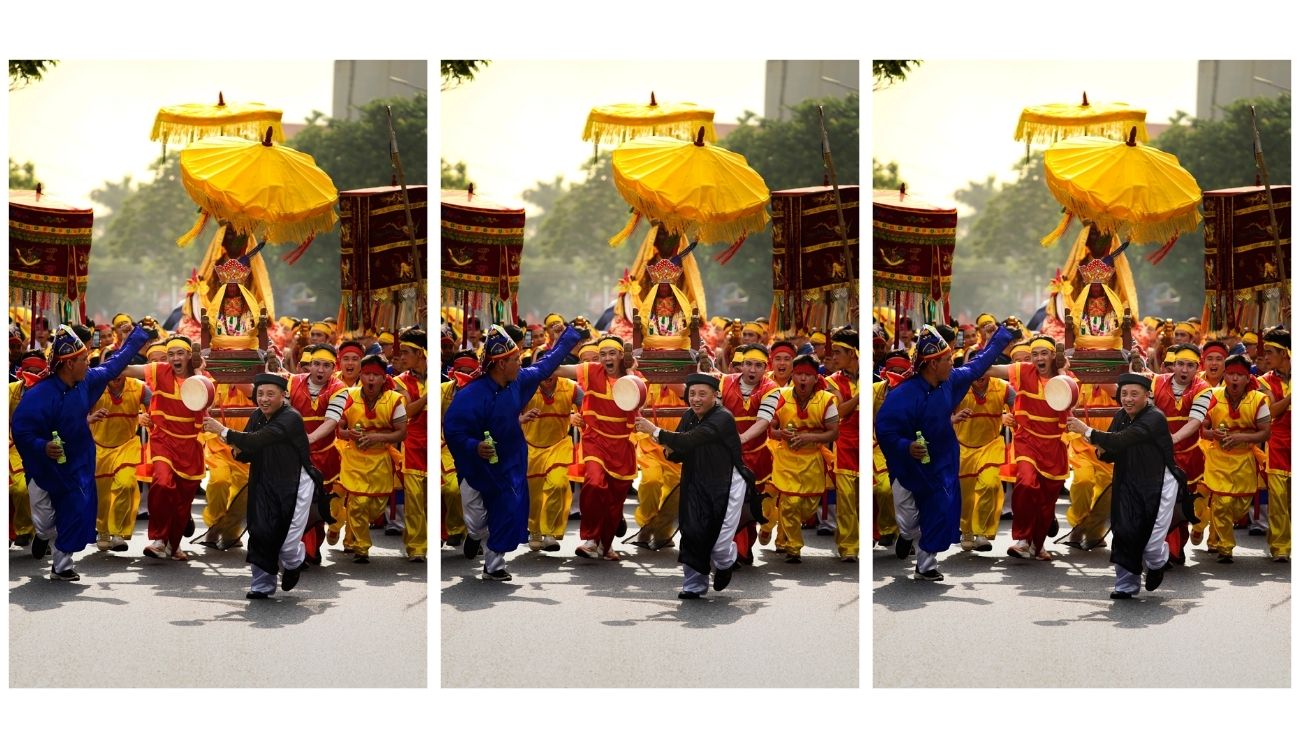
The work “Kết nối tâm linh”, also by Nguyễn Quốc An (Gen Z category), captures the fervor and energy of the traditional fire procession (rước pháo) in Đồng Kỵ village, Bắc Ninh, held between the 4th and 6th days of the first lunar month.
Traditional fire procession in Đồng Kỵ (Bắc Ninh)
Officially recognized as a National Intangible Cultural Heritage since 2016, this festival embodies collective energy, solidarity, ancestral memory, and offers a living window into Vietnamese folklore.
🛕 Chùa Dâu Temple Festival
The photograph “Rộn ràng lễ hội” by Nguyễn Văn Bùi illustrates the vibrant atmosphere of the Chùa Dâu Temple Festival—one of the oldest Buddhist temples in Vietnam (2nd century), located in the Luy Lâu region.
Chùa Dâu Temple Festival
Since 2017, the festival has been recognized as a National Intangible Cultural Heritage, celebrating history, spirituality, and Vietnam’s cultural diversity.
🔧 Traditional craft: bronze incense burner making in An Hội (Ho Chi Minh City)
The photo essay “Mạch nghề làm lư đồng An Hội” by Trịnh Thị Hồng Trang—awarded in the Gen Z category—highlights a nearly disappearing craft: the making of bronze incense burners (lư đồng) in the old An Hội neighborhood, a legacy of Chinese communities established in the late 19th century.
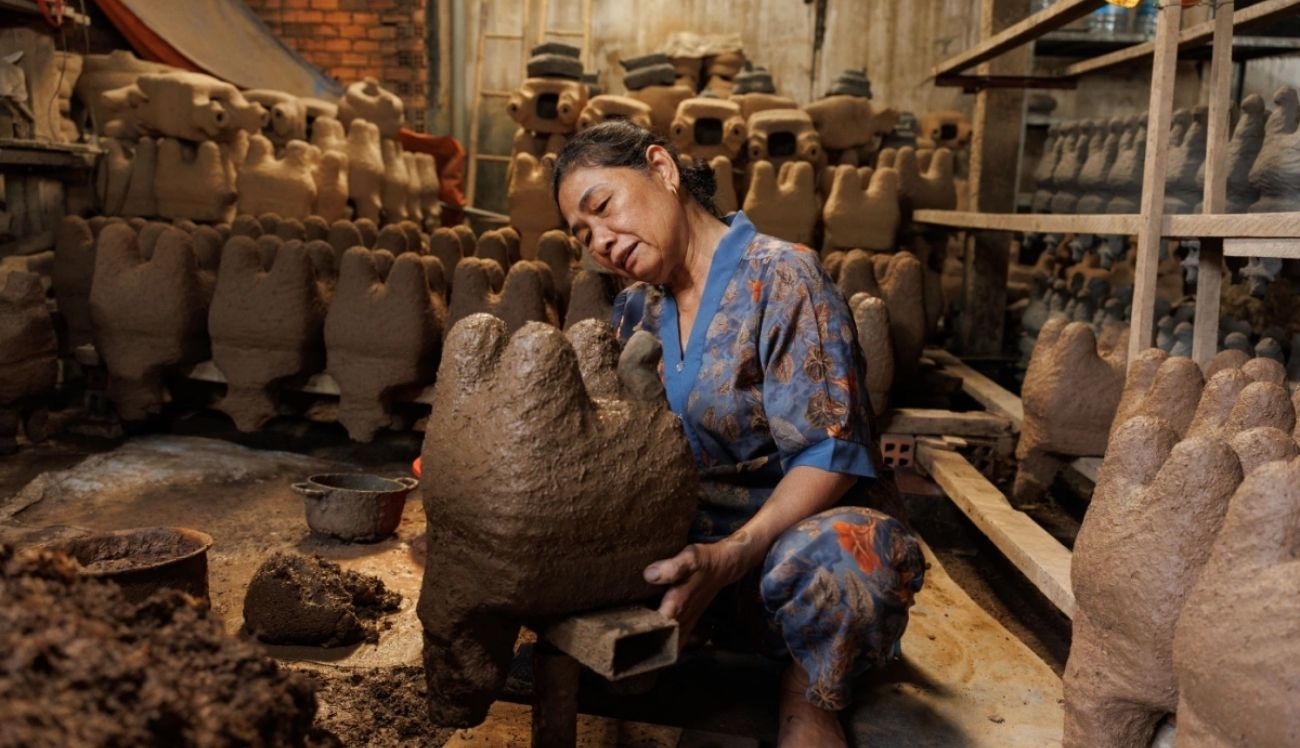
Traditional bronze incense burner making in An Hội (Ho Chi Minh City)
Today, only a few traditional workshops remain, faithful to ancestral know-how despite the challenges of modernization.
The importance of the contest in preserving Vietnamese heritage
The Vietnam Heritage Photo Contest 2025 is not only an artistic showcase; it plays a vital role in preserving and transmitting Vietnam’s cultural heritage.
Through these images, one reality becomes clear: despite rapid development and openness to modernity, Vietnam has never turned its back on its roots. On the contrary, traditional culture lies at the heart of its identity.
These photographs preserve the memory of rituals, traditional crafts, popular festivals, and communities living according to values passed down for centuries.
They remind us that culture is not a backdrop of the past, but a living force—nurtured daily by families, artisans, village elders, younger generations, and artists.
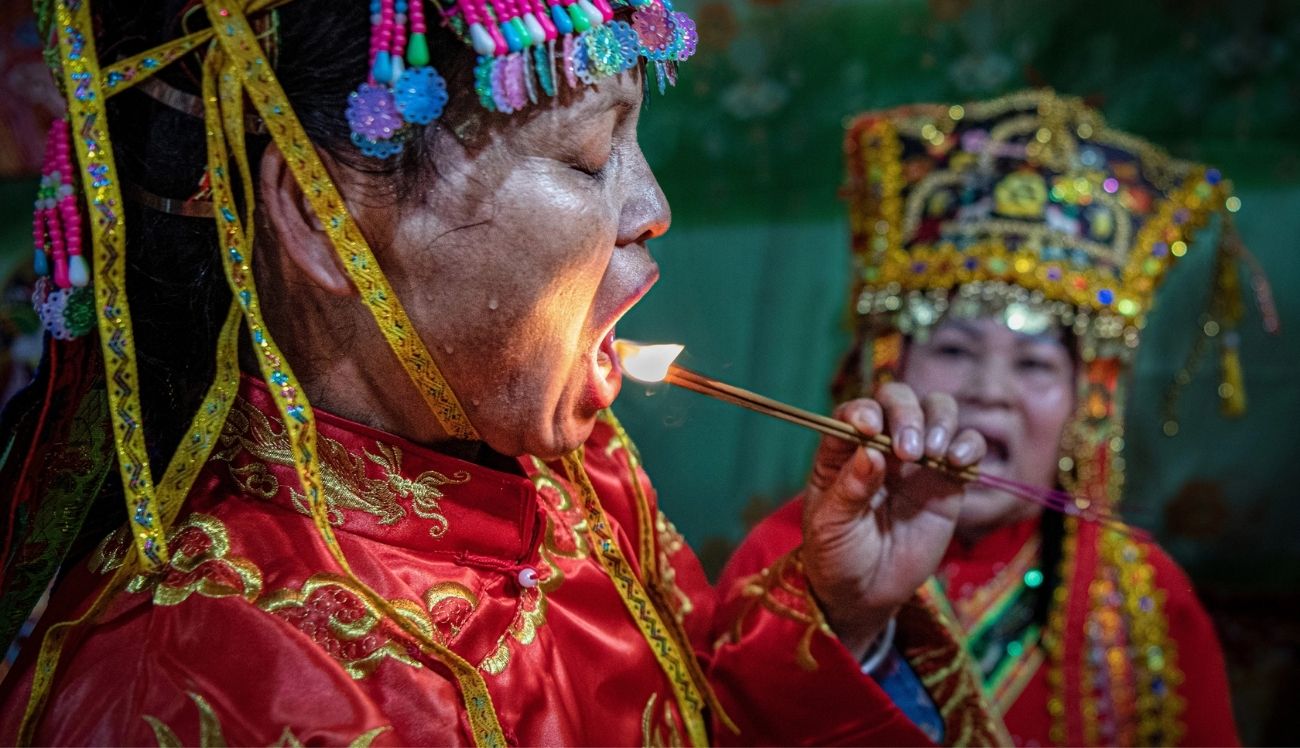
Then Rite of the Nùng Phàn Slình in Lạng Sơn
By highlighting these Vietnamese cultural moments, the contest not only documents this precious heritage but also encourages its continuation, visibility, pride, and shared responsibility.
For foreign travelers, it is an invitation to discover a Vietnam where tradition and modernity do not oppose each other, but harmoniously complement one another—a country that moves forward without ever forgetting where it comes from.
Discover Vietnam’s cultural journeys with Villages
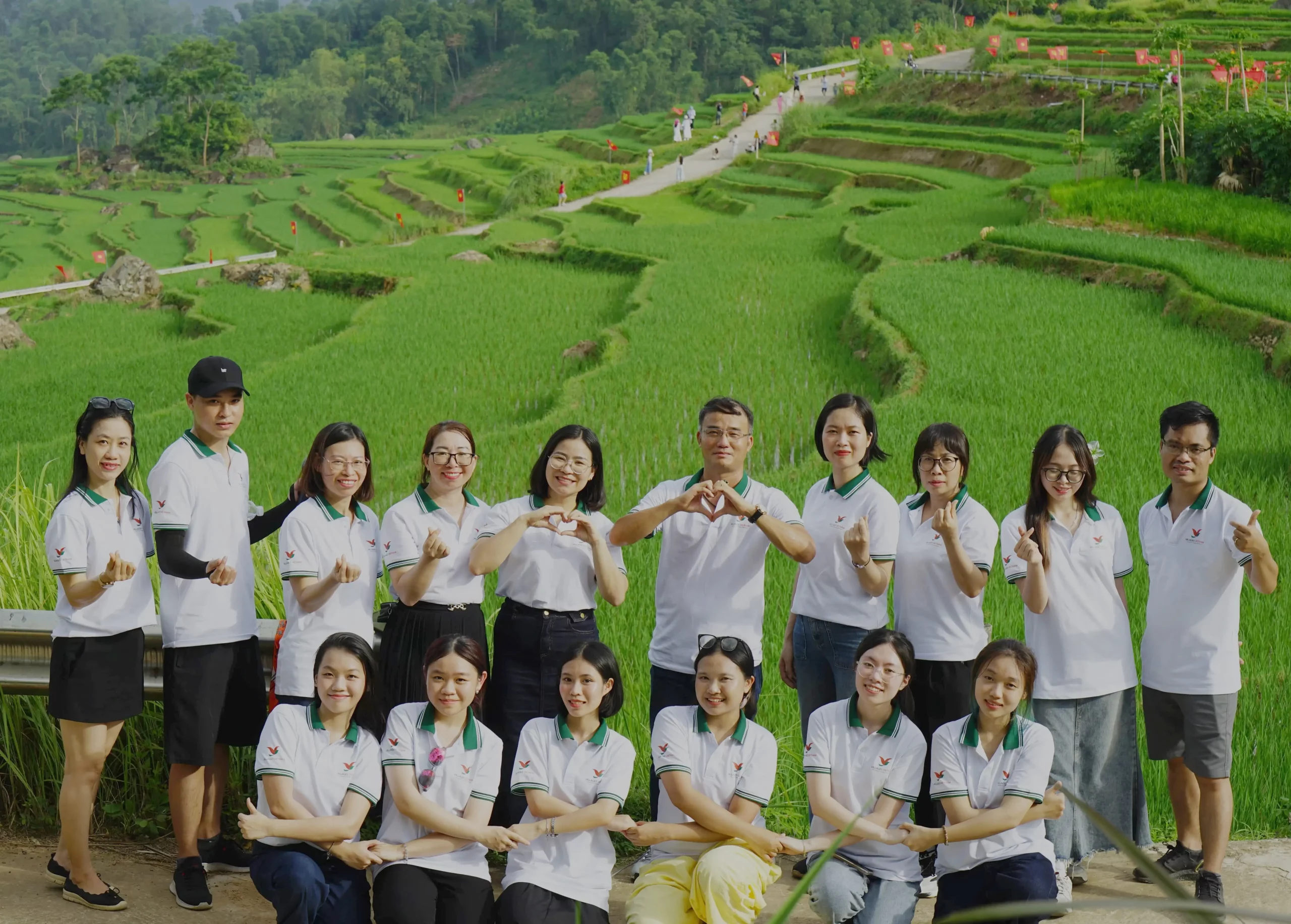
Let Villages Vietnam guide you toward other horizons—gentle, meaningful, and deeply human experiences. Simple yet unforgettable encounters.
We invite you to live rare moments:
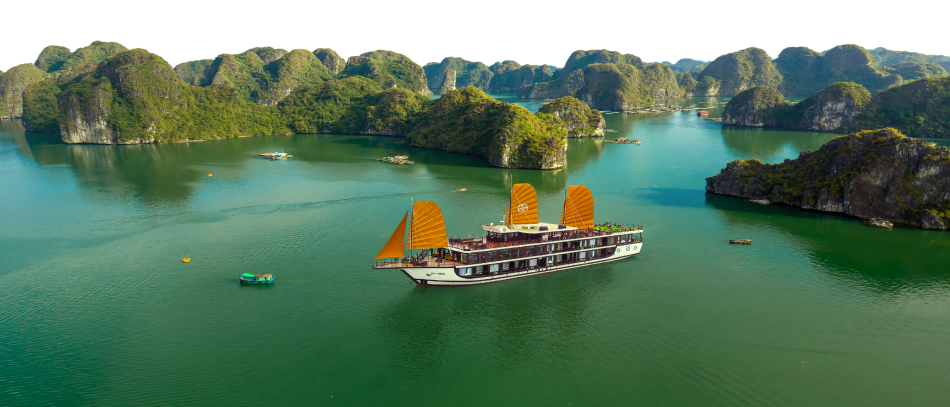
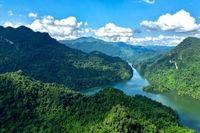
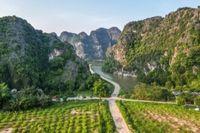
- Lose yourself in the picturesque landscapes of Vietnam
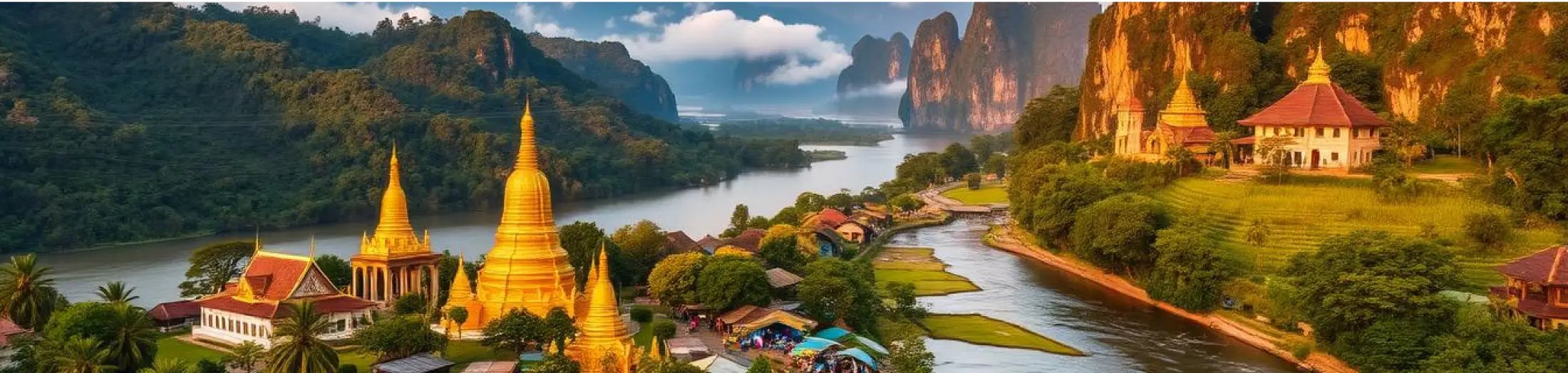
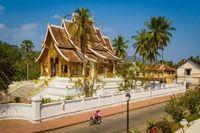
- Follow the peaceful rhythm of the rice fields in Laos
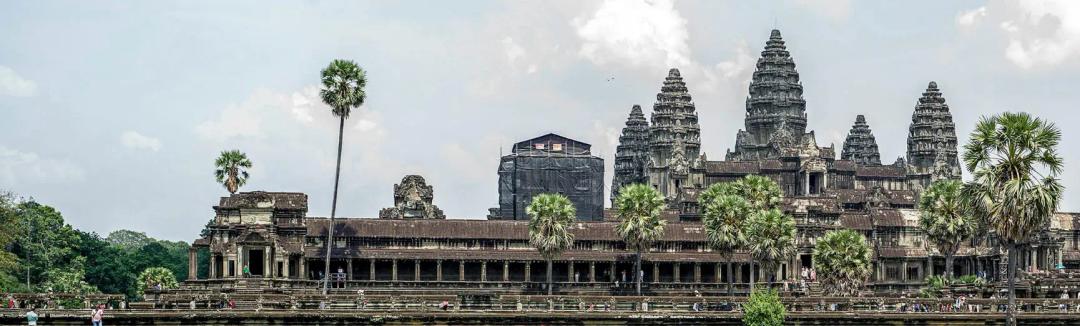
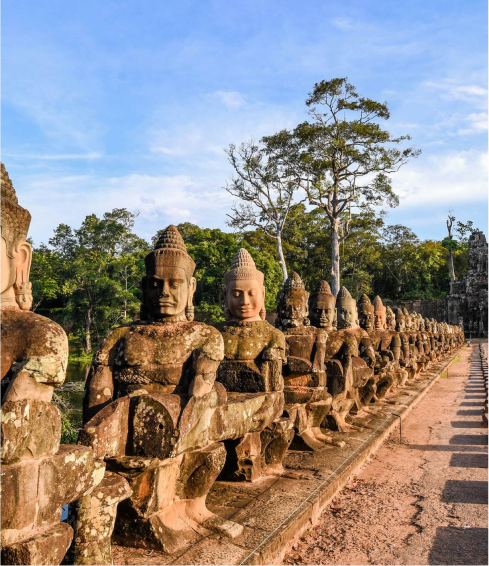
- Walk in silence toward the ancient temples of Cambodia, hidden deep within lush forests
Villages Vietnam proudly creates authentic cultural journeys, carefully crafted with heart. Our itineraries reveal the soul of Indochina—its traditions, gentleness, and the warmth of its people.
If you dream of a unique journey, designed just for you—a journey that leaves a lasting imprint on the heart—our team will be there, attentive and dedicated.
We promise you the most beautiful discoveries: stories to share, emotions to feel, and our deep knowledge of the lands you explore.
- Our contact: Ms Jade VU
- WhatsApp: +84 986 527 836
- Email: info@villagesvietnam.com
- Vietnam office: 7th floor, 30 Tran Phu Boulevard, Ha Dong District, Hanoi, Vietnam
- France office: 726 chemin de la Croix du Sud, 83200 Toulon, France
- Thailand office: Klang Muang Village, Soi Srinakarindra 24, Srinakarindra Road, Suan Luang District, Bangkok 10250, Thailand
Published by:
Villages Vietnam
Publication date:
31/12/2025
Frequently Asked Questions
In general, the best time to visit Vietnam is from November to April. But you can travel all year round. The weather changes a lot from region to region, so when it rains or gets cold in one place, it can be sunny somewhere else.
Internet access is easy and affordable. Most hotels, cafés, and restaurants offer free Wi-Fi. If you want to stay connected all the time on your phone, you can buy a local SIM card. It gives you a stable connection during your trip for a very good price.